
When trust in the welfare model is undermined, everyone loses. It is not only about taxpayer money being misused, but about the security and wellbeing of the most vulnerable members of society.
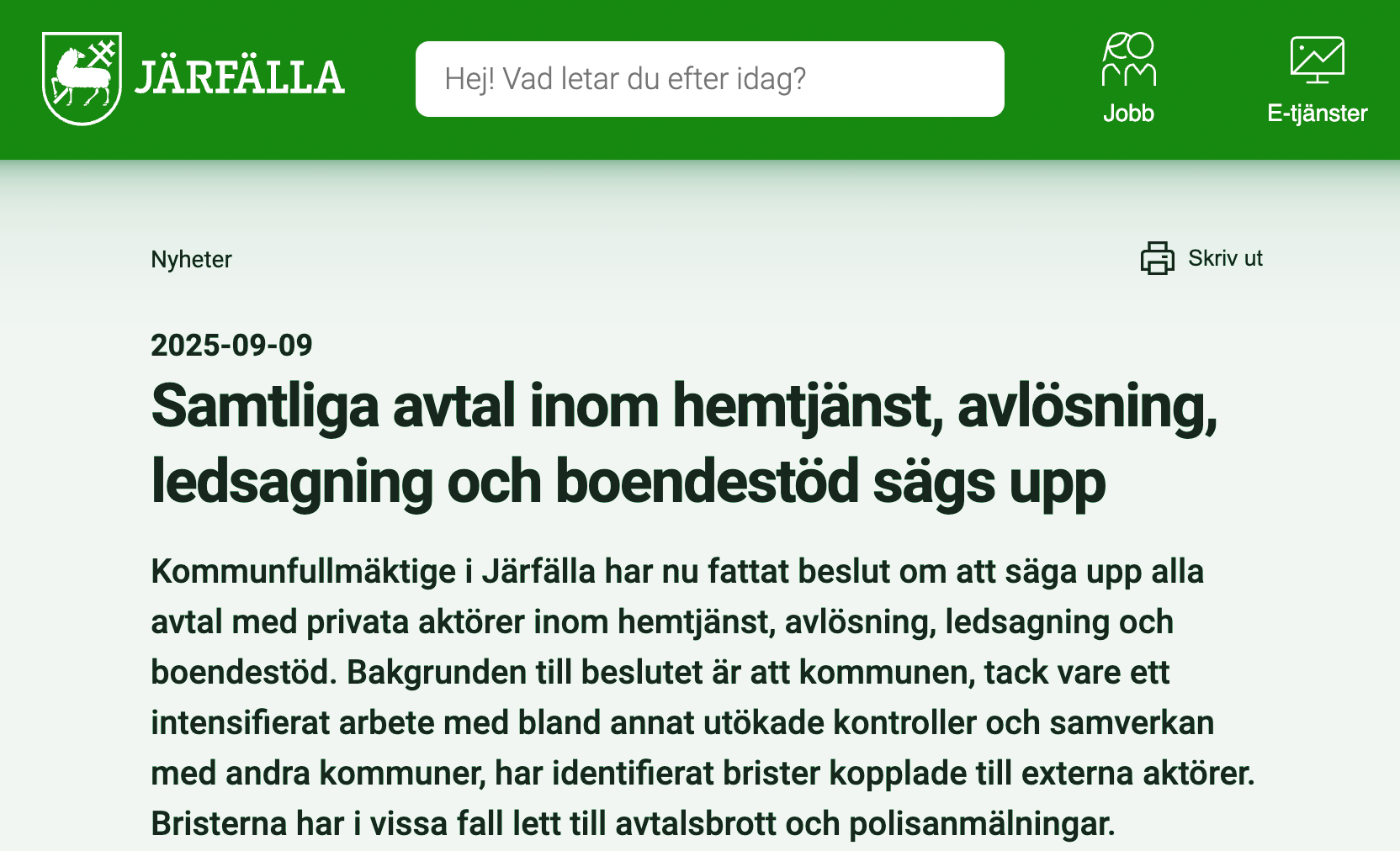
During the autumn of 2025, media reports highlighted how Järfälla Municipality took decisive action after a review of private care providers revealed significant deficiencies and suspected fraud. The decision was historic: all eight home care contracts were terminated, three cases were reported to the police, and the municipality brought the service back in-house.
The events in Järfälla highlight a critical issue for the entire public sector: the importance of proactive risk management and continuous oversight of the supplier chain.
The Swedish governments roadmap for public procurement, presented in October 2025, is a welcome step forward, but legislation takes time. To protect the welfare system here and now, two things are required:
- using data-driven analysis to identify risk patterns before they develop into systemic failures
- acting on available information and excluding non-compliant actors
Those who seek to exploit the system are both fast and adaptive. As a society, we must be faster. By maintaining full control over the supplier chain, we can ensure that resources are used for their intended purpose.
At Roaring, we are proud to support Järfälla Municipality and are encouraged to see more municipalities prioritising control and transparency in their supplier relationships.